Women's Trench Coats Autumn-Winter 2026/27: New Styles and Outfits

There is something cinematic about the gesture of popping the collar of a trench coat before stepping outside. It brings to mind golden-age film stars, Parisian boulevards, and sudden downpours. Yet the trench coat does not live on nostalgia alone: over time, it has evolved in shapes and materials, becoming a versatile piece of outerwear capable of accompanying different occasions and temperatures.


For autumn-winter 2026/27, alongside classic gabardine and twill styles, there is room for raincoats with relaxed lines, water-repellent fabrics, hoods, and adjustable drawstrings. Let us discover when to wear them, how to choose the right model, and which styling combinations bring out the best in different colours.

Women's Trench Coats Autumn-Winter 2026/27: All the New Styles

Classic Twill Trench Coat: Beige and Navy Blue

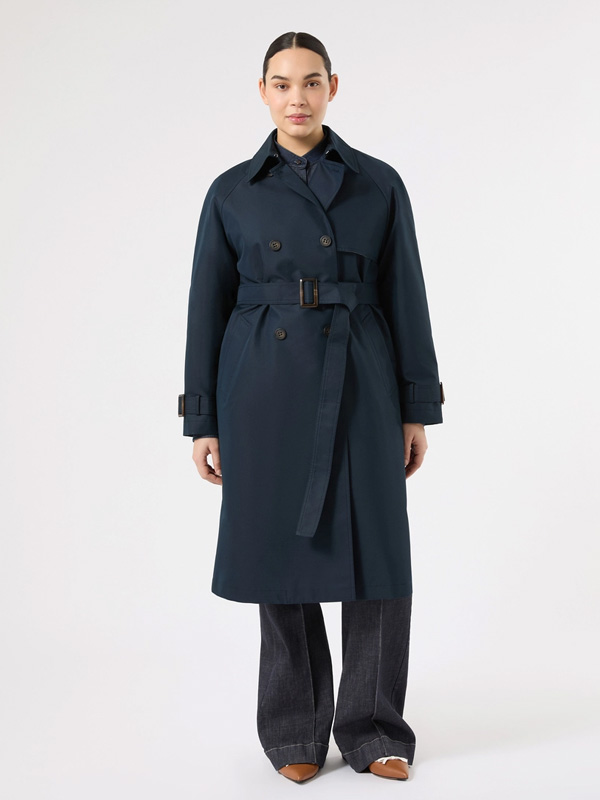
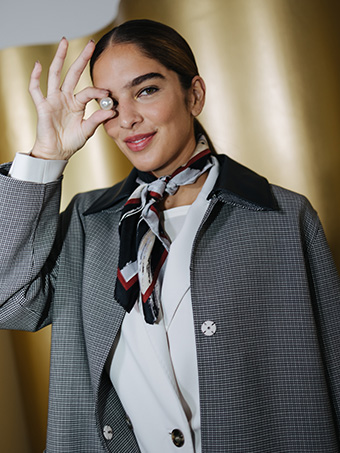
The beige water-repellent twill trench coat incorporates the most recognizable features of the classic style: double-breasted closure, shirt collar, front storm flaps, and wrist straps on raglan sleeves. Its straight line, lining, and matching belt also make it suitable over tailored suits. The navy blue twill trench coat variant maintains the same construction, offering a sophisticated alternative to black outerwear. The belt allows you to define the waist or leave the trench coat open to maintain a more vertical silhouette.

Elegant Cotton Gabardine Trench Coat

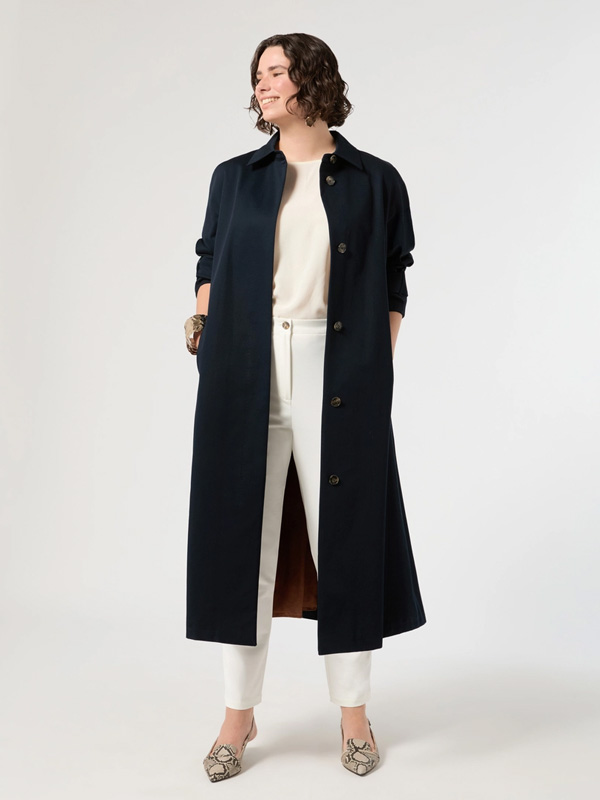
The navy blue cotton gabardine trench coat features a flared line with a back inverted pleat and hidden buttons. Hand-stitched tailoring pick-stitching, front kimono sleeves, and a matching belt define its exquisite construction. The ivory white cotton gabardine trench coat version presents the same style in a luminous shade. Compared to the classic trench coat, these garments offer greater flare at the hem and pair beautifully with midi skirts, dresses, and wide-leg trousers.


Raincoats and Utility Styles

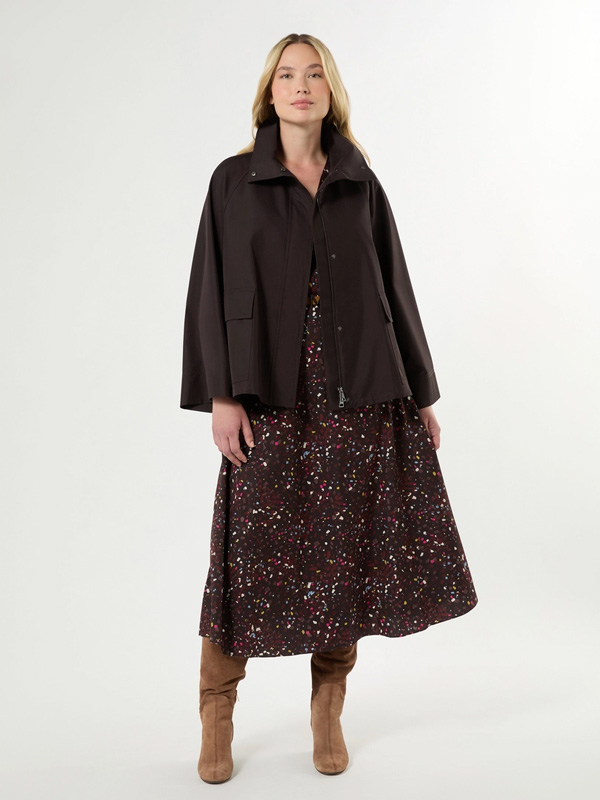
The brown water-repellent twill raincoat has a flared line, funnel neck, and maxi patch pockets. The two-way zip and elasticated drawstring at the hem allow you to adjust both the opening and volume of the garment. The khaki green water-repellent twill raincoat variant retains the same practical features while lending itself to combinations with denim, black, and natural tones. Meanwhile, the black water-repellent taffeta trench coat, made from washed nylon, stands out with its hood, asymmetrical hem, and waist and hem drawstrings. These details allow you to alter its silhouette, making it a functional choice for daily commutes.

How to Style a Trench Coat? Outfits and Tips

How to Style Beige and Navy Blue Trench Coats

A women's beige trench coat easily pairs with navy blue trousers and a white shirt for the office, or with jeans and a cream jumper for a casual outfit. Over a black dress, it creates a sharp contrast that is also suitable for evening wear. A women's navy blue trench coat works wonderfully with camel, ivory white, and grey. Combined with straight-leg jeans and a light blue shirt, it creates an effortless daily look; over a light-coloured dress, it accompanies more formal occasions.


How to Style Black, Brown, and Khaki Green Trench Coats

A black trench coat with a hood and drawstring can accompany straight-leg trousers and trainers, or a more structured suit, creating a refined contrast between technical outerwear and tailored clothing. A brown raincoat pairs nicely with cream knitwear and charcoal trousers, while khaki green works seamlessly with jeans, a white T-shirt, and trainers. For a tidier result, choose black trousers and a light shirt.

Can You Wear a Trench Coat in the Evening?

Yes. A gabardine or twill style can be worn over an evening dress or a tailored suit. Navy blue pairs beautifully with ivory, while beige creates an interesting contrast with a total-black look.

How to Choose the Trench Coat Best Suited to Your Figure?

A straight line vertically streamlines the silhouette, whereas a flared model leaves more volume in the lower section. Belts and drawstrings allow you to define the waist and adjust proportions. It is also important to check the fit across the shoulders, especially when wearing multiple layers underneath.

Is a Long or Short Trench Coat Better?

A long trench coat offers greater coverage and lends itself to pairings with midi dresses and tailored trousers. A short style leaves more of the lower outfit visible. The choice depends on your desired proportions and daily routine.

FAQs on Trench Coats and Raincoats

Where Does the Trench Coat Come From?

The trench coat originated from British military apparel as outerwear designed to protect against bad weather without restricting movement. Its name refers to the trenches, and several traditional details stem from this purpose: the double-breasted front, belt, and wrist straps.

Today, these traditional elements coexist with modern interpretations featuring zips, hoods, and flared lines.


When Should You Wear a Trench Coat?

The trench coat is primarily a mid-season piece of outerwear, ideal when temperatures are mild but protection is needed against cool air or light rain. In spring, it can be worn over a shirt, while in autumn, it accompanies jumpers and knitwear. Water-repellent fabrics are useful on unpredictable weather days, although they do not necessarily guarantee full protection against heavy rain.

In colder months, a trench coat can be worn with adequate layering, but lightweight styles do not replace a padded winter coat.


What is the Difference Between a Trench Coat and a Raincoat?

A trench coat is a type of outerwear traditionally characterized by a double-breasted closure, belt, and structured collar. A raincoat is defined by its primary function of rain protection. A trench coat in water-repellent fabric is not necessarily completely waterproof: protection depends on the material and overall construction.


Qual è la differenza tra trench e impermeabile?

Il trench è una tipologia di capospalla tradizionalmente caratterizzata da doppiopetto, cintura e collo strutturato. L'impermeabile è invece definito dalla funzione di protezione dalla pioggia. Un trench in tessuto antigoccia non è necessariamente completamente impermeabile: la protezione dipende dal materiale e dalla costruzione.